
1. Introduction
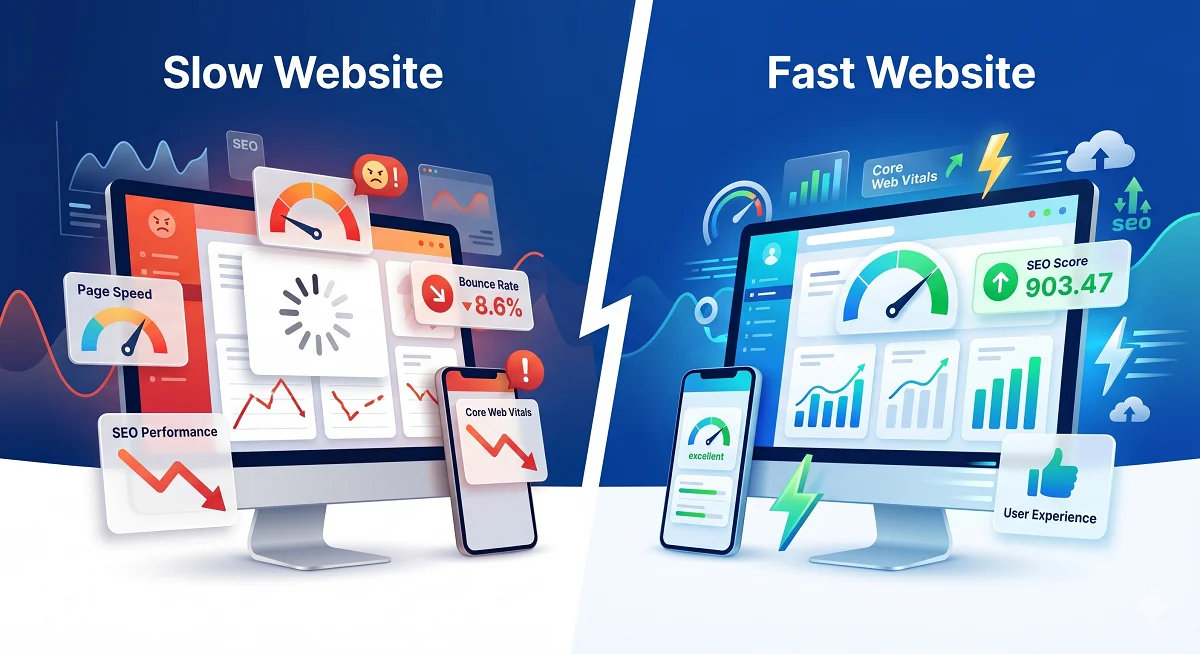
A slow website can quietly damage your business without you even noticing. Visitors leave before pages load, Google rankings drop, and potential customers lose trust in your brand. That is why website speed optimisation has become one of the most important parts of modern digital marketing.
For Australian businesses competing online, website speed is no longer optional. Whether you run a local service company, an eCommerce store, or a corporate website, speed directly affects conversions, SEO, and user experience.
In this guide, you will learn:
- Why websites become slow
- How slow websites hurt SEO
- The best ways to improve website speed
- Practical website speed optimisation tips
- When to hire professionals like chevrotech.com
2. Why Website Speed Matters for Australian Businesses
Australian consumers expect fast-loading websites. Most users leave a website if it takes more than a few seconds to load.
A fast website improves:
- Customer experience
- Search engine rankings
- Conversion rates
- Mobile usability
- Brand credibility
2.1 User Experience and Bounce Rate
People do not like waiting. If your website feels slow, visitors often leave immediately and choose a competitor instead.
For example:
- A slow restaurant website may lose bookings
- A slow online store may lose sales
- A slow tradie website may lose leads
Website speed optimisation helps businesses keep users engaged longer.
2.2 Google Rankings and SEO Performance
Google uses page speed as a ranking factor. Faster websites usually perform better in search results because they provide a better experience.
This is especially important for Australian businesses targeting local SEO searches such as:
- plumber Sydney
- accountant Melbourne
- electrician Brisbane
- Shopify developer Australia
3. The Most Common Reasons Your Website Is Slow
Many businesses assume their website is slow because of hosting alone, but multiple technical issues can reduce performance.
3.1 Poor Web Hosting
Cheap hosting often causes:
- Slow server response times
- Downtime
- Poor security
- Limited resources
Australian businesses should choose reliable hosting with strong performance and Australian server support when possible.
3.2 Large Image Files
Large images are one of the biggest causes of slow websites.
Common mistakes include:
- Uploading massive PNG files
- Using uncompressed photos
- Not resizing images for web use
Modern image formats such as WebP can significantly improve website loading speed.
3.3 Too Many Plugins
This is very common on WordPress websites.
Too many plugins can:
- Increase database requests
- Load unnecessary scripts
- Create compatibility issues
Only keep essential plugins installed.
3.4 Unoptimised Code
Messy code slows websites down.
This includes:
- Unused CSS
- Heavy JavaScript files
- Poor theme development
- Excessive animations
Professional website speed optimisation often involves cleaning and restructuring code.
3.5 No Website Caching
Caching stores temporary website data so pages load faster for returning users.
Without caching:
- Every page reloads from scratch
- Server load increases
- User experience becomes slower
4. How Slow Websites Affect SEO and Sales
A slow website affects more than just loading speed.
4.1 Impact on Conversions
Even a small delay can reduce conversions.
Examples:
- Online shoppers abandon carts
- Users stop filling forms
- Visitors lose trust
Fast websites create smoother customer journeys.
4.2 Impact on Mobile Users
Most Australian users browse websites on mobile devices.
Mobile users often experience:
- Slower internet connections
- Smaller screens
- Limited patience
A slow mobile website can severely hurt lead generation and sales.
5. How to Test Your Website Loading Speed
Before improving performance, you need to identify issues.
5.1 Best Free Website Speed Testing Tools
Recommended tools:
These tools analyse:
- Core Web Vitals
- Page loading speed
- Server response time
- Image optimisation
- JavaScript issues
Pay attention to:
- Largest Contentful Paint (LCP)
- First Input Delay (FID)
- Cumulative Layout Shift (CLS)
6. Website Speed Optimisation Techniques That Actually Work
There are many ways to improve website speed.
6.1 Optimise Images Properly
Best practices:
- Compress all images
- Use WebP format
- Resize images before uploading
- Lazy load images
Image optimisation alone can dramatically improve performance.
6.2 Use a CDN
A Content Delivery Network stores website files across multiple global servers.
Benefits include:
- Faster loading
- Better international performance
- Reduced server load
This is especially useful for Australian businesses targeting global audiences.
6.3 Minify CSS and JavaScript
Minification removes unnecessary spaces and code.
Benefits:
- Smaller file sizes
- Faster loading
- Better performance scores
6.4 Enable Browser Caching
Browser caching allows repeat visitors to load pages faster.
This improves:
- User experience
- Website speed
- SEO performance
7. WordPress Website Speed Optimisation Tips
WordPress websites can become slow if not maintained properly.
7.1 Best Plugins for Speed Optimisation
Popular plugins include:
- WP Rocket
- LiteSpeed Cache
- Autoptimize
- Perfmatters
- Smush
Additional tips:
- Use lightweight themes
- Remove unused plugins
- Update plugins regularly
- Optimise the database
Businesses using WordPress should perform regular website maintenance to avoid long-term speed problems.
chevrotech.com provides professional WordPress website speed optimisation services for Australian businesses looking to improve performance and rankings.
8. Shopify Website Speed Optimisation Tips
Shopify stores can also become slow due to heavy themes and excessive apps.
8.1 mprove Shopify Theme Performance
Ways to improve Shopify speed:
- Remove unused Shopify apps
- Use lightweight themes
- Compress product images
- Reduce large sliders
- Avoid unnecessary scripts
Fast Shopify stores improve:
- Customer trust
- Conversion rates
- Mobile performance
For Australian eCommerce businesses, faster stores can significantly improve sales during peak shopping periods.
9. Mobile Website Speed and Core Web Vitals
Google now prioritises mobile performance heavily.
9.1 Understanding Core Web Vitals
Core Web Vitals measure user experience.
Key metrics include:
- Loading speed
- Visual stability
- Interactivity
A good score helps improve:
- SEO rankings
- Mobile usability
- Customer engagement
Website speed optimisation should always include mobile testing.
10. When to Hire a Website Speed Optimisation Agency
Sometimes website issues become too technical to fix internally.
10.1 Signs You Need Professional Help
You may need experts if:
- Your website still loads slowly after optimisation
- Google PageSpeed scores remain poor
- Your website crashes under traffic
- SEO rankings continue dropping
- Mobile performance is weak
Professional agencies use advanced optimisation methods including:
- Server optimisation
- Database optimisation
- CDN configuration
- Code optimisation
- Technical SEO improvements
chevrotech.com helps Australian businesses improve website loading speed, SEO performance, and customer experience through professional website speed optimisation services.
11. Final Thoughts on Website Speed Optimisation
Website speed directly affects rankings, conversions, customer trust, and overall business growth. A slow website can quietly reduce leads and sales every single day.
The good news is that most speed problems can be fixed with the right strategy. From image optimisation and caching to better hosting and cleaner code, small improvements often create major results.
Australian businesses that invest in website speed optimisation usually see:
- Better SEO rankings
- Lower bounce rates
- Higher conversions
- Improved mobile experience
If your website is loading slowly, now is the perfect time to act. Contact chevrotech.com today for professional website speed optimisation services designed specifically for Australian businesses.
12. Frequently Asked Questions
Q1. What is website speed optimisation?
A. Website speed optimisation is the process of improving how quickly a website loads and performs. It includes image compression, caching, code optimisation, better hosting, and reducing unnecessary scripts to create a faster user experience.
Q2. Why is my website loading slowly?
A. Common reasons include poor hosting, large image files, too many plugins, heavy themes, unoptimised code, and lack of caching. Slow websites often require technical analysis to identify the exact cause.
Q3. Does website speed affect SEO?
A. Yes. Google uses page speed and Core Web Vitals as ranking factors. Faster websites usually perform better in search results because they provide a better experience for users on desktop and mobile devices.
Q4. How can I improve website speed quickly?
A. Quick improvements include compressing images, enabling caching, removing unnecessary plugins, using a CDN, and upgrading hosting. These changes can significantly improve loading speed and performance.
Q5. Should I hire professionals for website speed optimisation?
A. If your website remains slow after basic fixes, professional optimisation may be necessary. Experts can identify deeper technical issues and implement advanced solutions to improve performance and SEO.
4 Responses
Outstanding post, I conceive website owners should learn a lot from this weblog its rattling user friendly.
thank you very much
I’m truly enjoying the design and layout of your blog. It’s a very easy on the eyes which makes it much more pleasant for me to come here and visit more often. Did you hire out a designer to create your theme? Superb work!
Thanks for your kind words, We are a digital marketing agency let me know if you want to design your website we will be happy to help