
1. Introduction
Many Australian businesses invest thousands of dollars into their websites but still struggle to generate leads, improve rankings, or convert visitors into customers. In most cases, the problem is not the business itself — it is the website strategy behind it.
The truth is that the common website mistakes Australian businesses make can seriously damage visibility, credibility, and revenue. From slow loading speeds to weak SEO foundations, even small website issues can cost businesses valuable opportunities in competitive Australian markets.
In this in-depth guide, we will explore the biggest website mistakes affecting Australian businesses today, explain why they matter, and show you practical ways to fix them. Whether you run a local service company, an eCommerce store, or a growing startup, these insights will help you create a stronger online presence.
2. Why Your Business Website Matters More Than Ever
Australian consumers expect businesses to have fast, professional, and trustworthy websites. Your website is often the first interaction customers have with your brand, and first impressions matter.
A poorly designed or outdated website can:
- Reduce customer trust
- Increase bounce rates
- Hurt search rankings
- Lower conversion rates
- Damage brand credibility
Businesses across Melbourne, Sydney, Brisbane, and Perth are investing heavily in digital growth. If your website cannot compete technically or visually, customers will quickly move to competitors.
3. Common Website Mistakes Australian Businesses Make
Why These Website Mistakes Hurt Growth
Many businesses focus only on appearance while ignoring functionality, SEO, and performance. A beautiful website alone does not generate results.
The most common website issues include:
- Slow loading times
- Poor mobile experience
- Weak SEO structure
- Outdated layouts
- Thin content
- Broken user journeys
- Lack of maintenance
These problems affect both customer experience and Google rankings.
4. Ignoring Mobile Responsiveness
How Mobile Usage Impacts Australian Businesses
More than half of Australian website traffic now comes from mobile devices. If your website is difficult to use on smartphones or tablets, users will leave within seconds.
Common mobile problems include:
- Tiny text sizes
- Broken layouts
- Slow mobile speed
- Buttons too close together
- Poor image scaling
Google also uses mobile-first indexing, meaning mobile usability directly impacts rankings.
A responsive website should:
- Adapt to all screen sizes
- Load quickly on mobile networks
- Offer simple navigation
- Provide easy-to-click buttons
- Maintain readable typography
Businesses investing in responsive web design Australia strategies often experience better engagement and higher conversions.
5. Slow Website Speed and Poor Performance
Website speed is one of the biggest ranking and conversion factors today.
A slow website frustrates users and reduces trust instantly.
How Website Speed Affects SEO
Google prioritises fast websites because users expect instant access to information. Even a one-second delay can reduce conversions significantly.
Slow websites often suffer from:
- Large image files
- Poor hosting
- Excessive plugins
- Unoptimised code
- No caching setup
For Australian businesses competing locally, speed optimisation is critical.
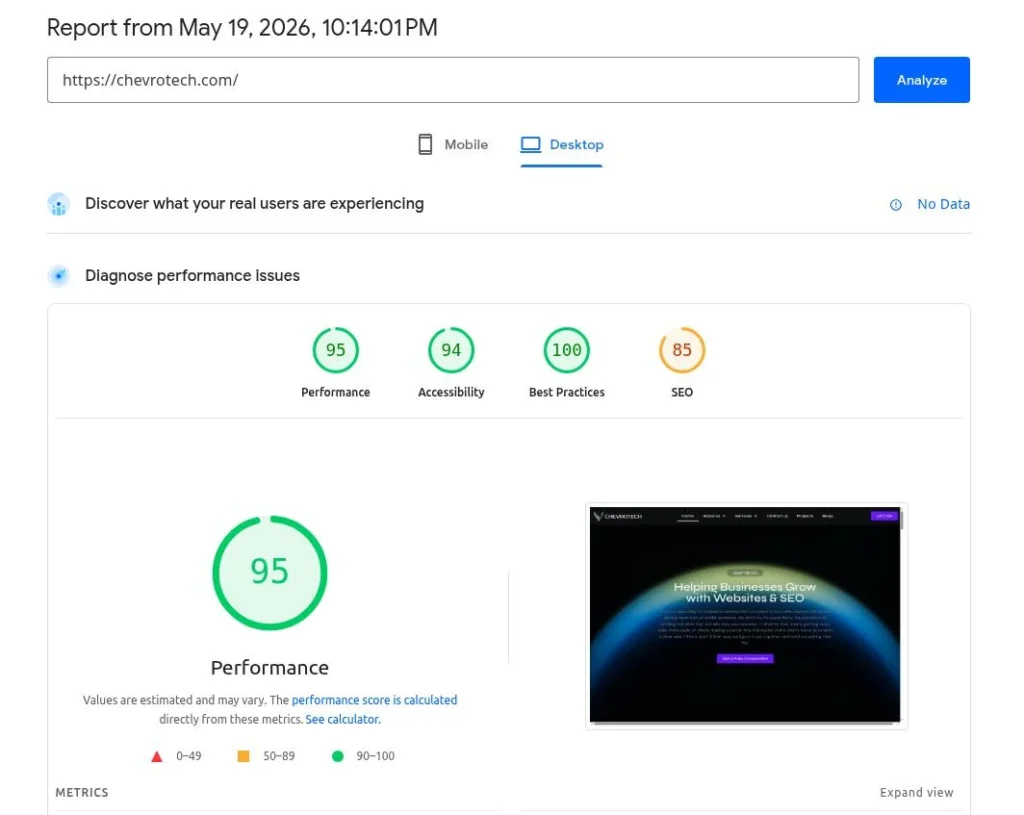
Tools to Test Website Performance
Useful tools include:
At chevrotech.com, speed optimisation services focus on improving Core Web Vitals, reducing load times, and enhancing user experience for Australian businesses.
6. Weak SEO Foundations
Many businesses launch websites without proper SEO setup.
This mistake limits visibility on Google and prevents businesses from reaching potential customers.
Common Technical SEO Problems
Technical SEO issues include:
- Missing meta titles
- Duplicate pages
- Broken links
- Poor site structure
- Missing XML sitemaps
- Incorrect redirects
Without proper optimisation, search engines struggle to understand your website.
Missing On-Page SEO Elements
Important SEO elements include:
- Keyword-optimised headings
- Internal linking
- Image ALT text
- Optimised URLs
- Meta descriptions
- Structured data
Businesses that ignore SEO foundations often rely heavily on paid advertising because their organic rankings remain weak.
7. Outdated Website Design
Signs Your Website Needs a Redesign
An outdated website can make even a great business appear unprofessional.
Warning signs include:
- Old-fashioned layouts
- Cluttered pages
- Non-responsive design
- Inconsistent branding
- Difficult navigation
- Poor readability
Modern Australian customers expect sleek, intuitive, and visually appealing experiences.
A professional redesign improves:
- Brand perception
- Conversion rates
- User engagement
- Mobile usability
- SEO performance
Chevrotech helps businesses modernise outdated websites with conversion-focused web design solutions tailored for Australian markets.
8. Poor User Experience and Navigation
Navigation Problems That Frustrate Users
User experience directly impacts conversions.
If visitors cannot find information quickly, they will leave.
Common UX mistakes include:
- Confusing menus
- Too many navigation options
- Poor page hierarchy
- Excessive pop-ups
- Hard-to-read fonts
Good UX should guide visitors naturally toward desired actions.
Best practices include:
- Clear navigation menus
- Logical page structures
- Consistent branding
- Fast-loading pages
- Accessible design
Australian businesses that invest in UX improvements often experience lower bounce rates and stronger customer engagement.
9. Not Optimising for Local SEO
Google Business Profile and Local SEO
Local SEO is essential for businesses targeting Australian customers in specific cities or regions.
Many businesses forget to optimise:
- Google Business Profile
- Local keywords
- Location pages
- NAP consistency
- Local backlinks
For example, a Melbourne plumber should target keywords such as:
- plumber Melbourne
- emergency plumber Melbourne
- local plumbing services Melbourne
Local SEO helps businesses appear in Google Maps and local search results.
10. Using Low-Quality Website Content
Why Thin Content Hurts Rankings
Content quality is one of Google’s strongest ranking signals.
Thin or duplicate content can:
- Reduce trust
- Lower rankings
- Increase bounce rates
- Limit authority
Strong website content should:
- Answer customer questions
- Include relevant keywords naturally
- Provide useful insights
- Be easy to read
- Demonstrate expertise
Australian businesses should focus on creating original content tailored to local audiences rather than copying competitors.
11. Ignoring Website Security and Maintenance
Website Security Risks for Australian Businesses
Cybersecurity threats are increasing globally, including in Australia.
Businesses that neglect maintenance risk:
- Malware attacks
- Website downtime
- Data breaches
- SEO penalties
- Lost customer trust
Important maintenance tasks include:
- Plugin updates
- Security monitoring
- Daily backups
- Malware scanning
- Performance optimisation
Website maintenance services help businesses keep websites secure and functional year-round.
12. Weak Calls-to-Action That Reduce Conversions
How Better CTAs Increase Leads
Many websites fail because they do not clearly guide users toward action.
Weak CTAs include:
- Generic buttons
- Hidden contact forms
- Confusing messaging
- No urgency
Effective CTAs should:
- Be visually clear
- Use action-driven language
- Appear throughout the site
- Focus on benefits
Examples:
- Get a Free Quote
- Book a Consultation
- Speak With Our Team
- Start Your Project Today
Conversion-focused websites help businesses turn traffic into leads consistently.
13. How Professional Website Optimisation Helps
Benefits of Hiring Website Experts
Professional website optimisation provides long-term business benefits.
Experienced agencies can help with:
- Technical SEO
- Speed optimisation
- Conversion improvements
- Website redesigns
- Mobile optimisation
- Ongoing maintenance
At chevrotech.com, businesses can access tailored website development and optimisation solutions designed specifically for Australian markets.
Working with experts saves time, improves rankings, and helps businesses achieve sustainable digital growth.
Final Thoughts
The common website mistakes Australian businesses make often seem small at first, but they can significantly impact visibility, customer trust, and revenue over time.
Businesses that prioritise website speed, SEO, mobile responsiveness, user experience, and quality content consistently outperform competitors online.
If your website feels outdated, slow, or underperforming, now is the perfect time to optimise it. The right improvements can dramatically improve search rankings, lead generation, and customer engagement.
Chevrotech specialises in website development, SEO, speed optimisation, and redesign solutions for Australian businesses looking to grow online.
Contact Chevrotech Today
Transform your website into a high-performing business asset with expert web solutions tailored for Australian markets.
Frequently Asked Questions
Q1. What is the biggest website mistake businesses make?
A: One of the biggest mistakes is ignoring SEO and mobile optimisation. Businesses often focus only on appearance while neglecting speed, usability, and search visibility.
Q2. Why is website speed important for SEO?
A: Website speed affects user experience and Google rankings. Faster websites reduce bounce rates and improve conversions, especially for mobile users.
Q3. How often should a business redesign its website?
A: Most businesses should review their website every 2–3 years to ensure it remains modern, secure, and aligned with changing user expectations.
Q4. What is local SEO for Australian businesses?
A: Local SEO helps businesses appear in location-based searches such as “Electrician Melbourne” or “cafe Sydney,” improving visibility for nearby customers.
Q5. Why is website maintenance necessary?
A: Maintenance keeps websites secure, fast, and functional by updating plugins, monitoring security, fixing issues, and improving performance regularly.